
Frost vs. Freeze: The Cold Truth About Protecting Your Plants
One of the benefits of living in Central Florida is we don’t see the temperature drop below 32F very often, but when it does, we need to be prepared!
First, let’s define the difference between a frost, a freeze, and a hard freeze so we know how to react and what to expect.
What’s the difference between a frost and a freeze?
A frost is when the air near the ground drops to 32F or below, even though the official air temperature is slightly above freezing. Water vapor freezes into ice directly on surfaces (like grass and leaves), and can damage delicate plants if left uncovered.
A freeze is when the air temperature drops below 32F, resulting in surface temperatures that are even lower. If the temperature remains below 32F for more than a couple hours, the water in the plant cells freeze, causing the cell walls to rupture, leading to mushy leaves and stems. Freezes will kill most annuals and tender plants.
A hard freeze is when we have several hours of temperatures at or below 28F. At this point, a larger variety of plants will be killed.
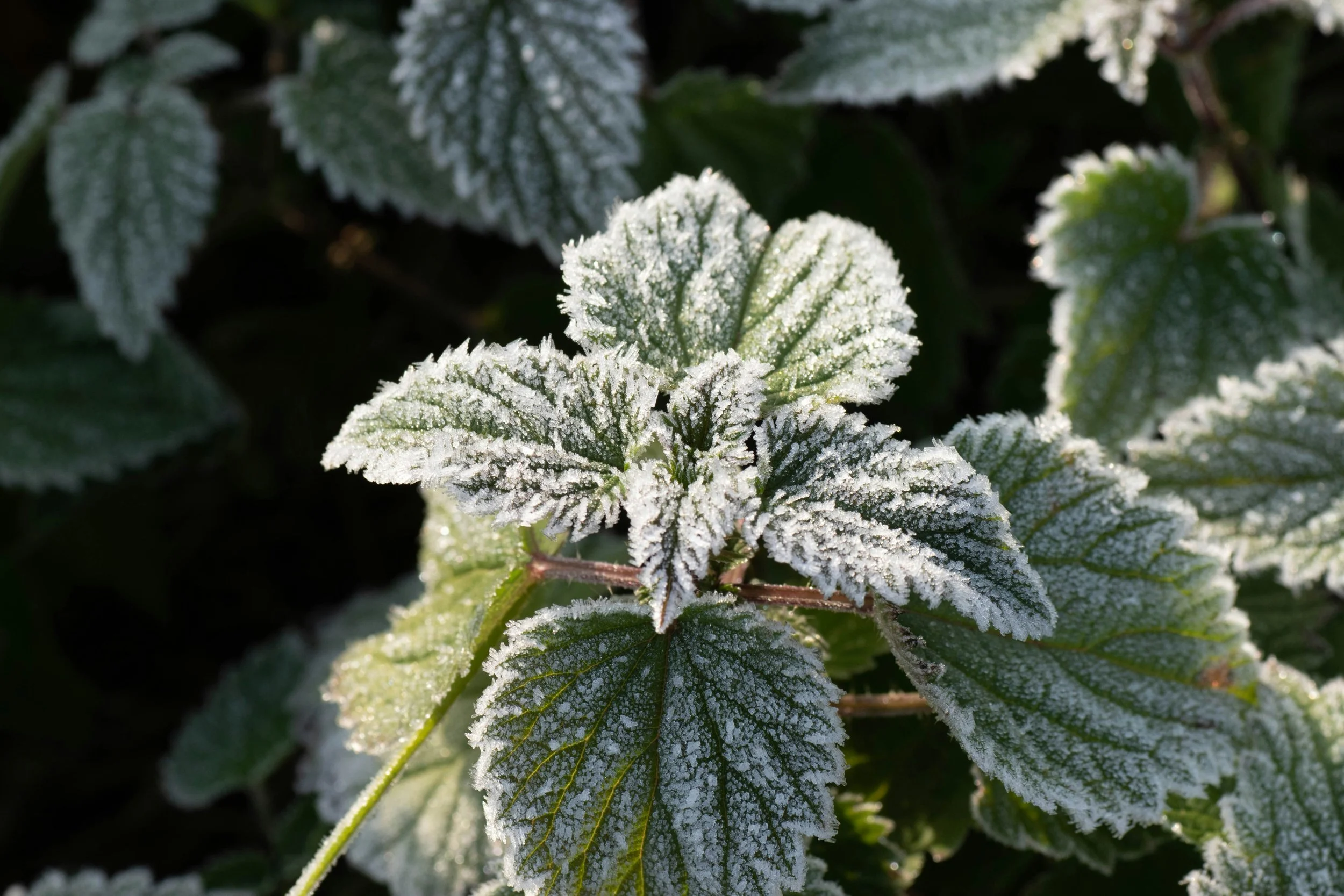
Frost on the leaves of a plant.
What can I do to protect my garden?
1. Cover Your Plants
Use:
Frost cloths
Old sheets or blankets
Burlap
Cardboard boxes (for small plants)
Tip: Avoid plastic touching leaves—it can trap cold and cause damage. Always remove covers in the morning once temperatures rise.
2. Water Before Cold Nights
Moist soil holds heat better than dry soil. Watering earlier in the day can help keep soil temperatures slightly warmer overnight. Once the temperature drops and is below 32F, shut the irrigation off! You don’t want water spraying on your plants when the temperature is below freezing, because the water can freeze on the leaves and damage the foliage.
Tip: Water early enough in the day that there’s no standing water left on the leaves by nightfall.
3. Mulch for Insulation
Apply mulch (straw, bark, leaves) around the base of plants to protect roots and retain soil warmth—especially important during a freeze.
4. Move Containers Indoors
Potted plants are more vulnerable because their roots are exposed to cold air. Move them into a garage, porch, or indoors when freezing temperatures are expected.
5. Use Covers for Raised Vegetable Beds
Garden fabric, row covers, or plastic domes can create a warmer microclimate for sensitive plants. Just remember to ventilate during the day if temperatures rise.
6. Break Out Those Christmas Lights!
If you have incandescent Christmas lights (the kind that give off heat), wrap those around the base of your especially sensitive plants and then cover the whole plant to help prevent the roots from freezing.
7. Hold Off on Pruning
The more leaves, the more insulation your plants have to protect themselves. Don’t prune or cut back your plants before late February or early March to make sure we are out of the freeze danger zone.
Which plants should I prioritize?
In Central Florida, most of us have tropical, flowering, and colorful plants. All of these are especially suseptible to freezes. You probably don’t have enough old bed sheets to cover every plant in your yard, so you’ll need to pick and choose which ones to cover.
Identify your most expensive plants, such as palm trees, fruit trees, or any ornamental blooming plant that is special to you or hard to find. Any newer plants that haven’t had time to establish a hearty root system yet should also be prioritized.
What do I do after a freeze?
Stop and wait. You’ll likely see evidence of damage after a freeze, including drooping and wilting, color changes, dead leaves and stems, and leaf drop. While some damage is immediate, total damage may take several days to a few weeks to become fully visible. If you want to check on your babies, you can always conduct The Scratch Test. On woody plants, scratch the bark. If the layer underneath is green, the plant is still alive.
Wait to prune. Do not immediately prune your plants. The damaged, dead outer growth can protect the inner living tissue from any more freezes we may get this season.
Did I say wait? A common mistake I see is people make is incorrectly assuming their plant is a total loss and they rip the whole thing out. You could save yourself money and heartache by waiting until we get some warmer weather and the plant has had a chance to send out new growth.
Best of luck with our impending temperature dip, and as always…
Stay Dirty,
Ashley