
Olive trees might not be the first thing that comes to mind in Central Florida, but with the right conditions, they can be surprisingly rewarding—especially when winter gives us a rare cold snap. In areas like Lakeland and Plant City, those occasional frosty nights actually play an important role. Olive trees need a period of chill (called “chilling hours”) to properly flower and set fruit, so colder winters often mean a more abundant olive harvest.
Growing & Harvesting Olives in Central Florida
For best results, choose varieties suited to warmer climates like:
Arbequina – Compact, highly productive, and great for beginners
Koroneiki – Excellent for oil production and heat-tolerant
Arbosana – Small but flavorful olives with consistent yields
Olives are typically ready to harvest in late fall when they turn from green to deep purple or black. You can hand-pick them or gently shake branches over a tarp.
Making Olives Edible
Fresh olives straight from the tree are extremely bitter and require curing before they can be enjoyed. The simplest method is a brine cure:
Crack each olive slightly to help absorb the brine
Soak in water, changing it daily for about a week
Transfer to a saltwater brine (about 1/4 cup salt per quart of water)
Let cure for 2–4 weeks until the bitterness fades
After curing, you’ll have delicious, home-prepared olives ready for snacking—or cocktails.
A True Garden to Glass Experience
An olive martini made from your own backyard harvest is more than just a drink—it’s a conversation piece. With a little patience and the right winter conditions, you can turn a rare Florida crop into something timeless, elegant, and entirely your own.
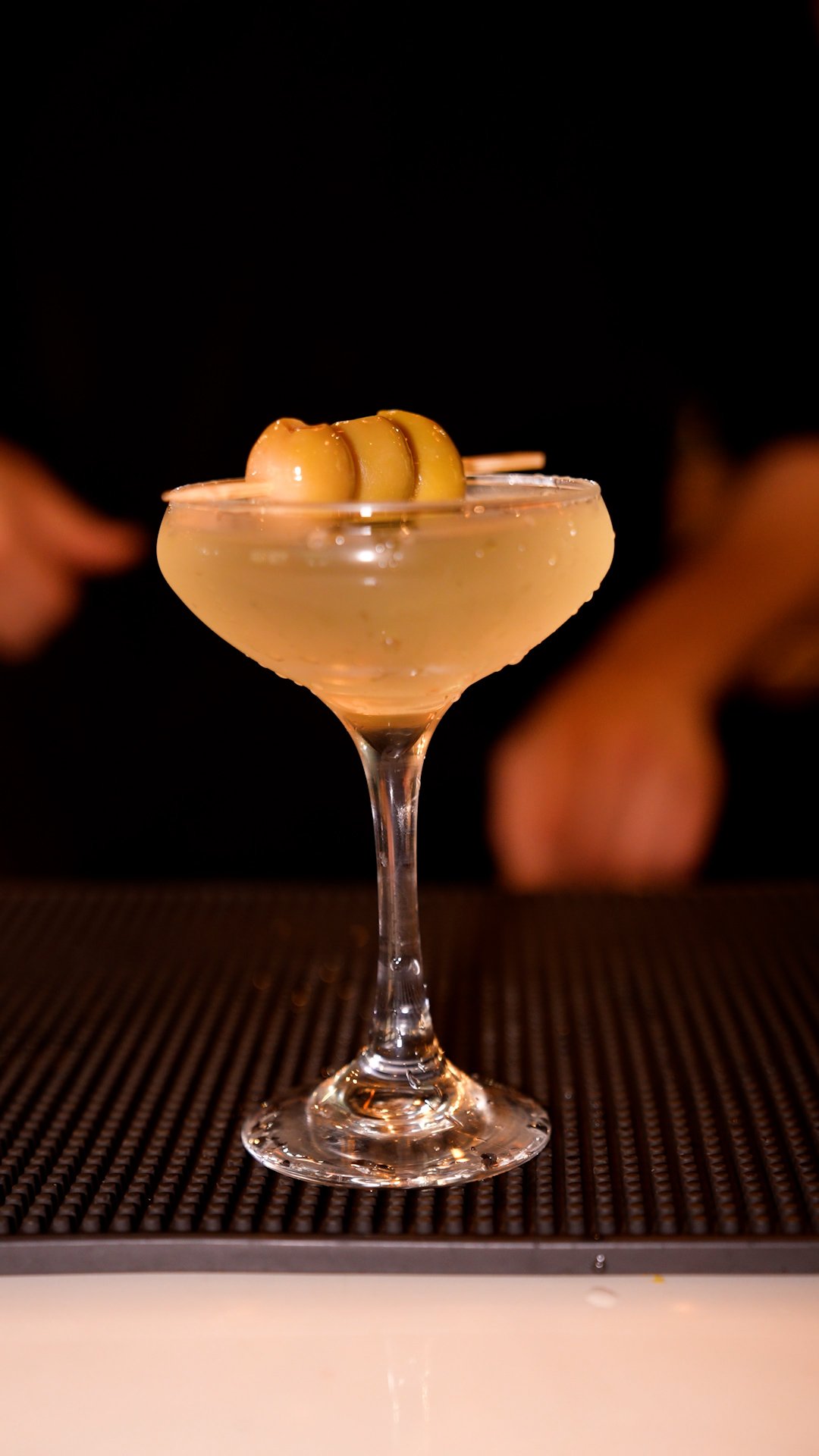
Ingredients:
3 oz vodka
1 oz olive juice
Dash of dry vermouth
Green olives
Method:
Pour all ingredients into a cocktail shaker. Add ice and shake until chilled. Strain into a chilled glass and garnish with your home-cured olives.
Did you try this cocktail? Let me know!
Stay Dirty,
Ashley